Scott Wacker:
It started before the global financial crisis. We saw electronic trading, and foreign exchange started to build a little bit of momentum. We were really on the multi-dealer platforms. There were a number of big players. But post-global financial crisis, there seemed to be a really big pullback. And then we saw all this regulation come out which then started pushing the market back toward a regulated venue-type market. The CFTC and some of the other regulatory venues kind of led toward some of these more regulated market-type outcomes. Once the technology kicked in or started to build momentum and better data, better liquidity, the benefits of electronic trading started to almost prove themselves. You had the regulatory push. But then as clients started to adopt the technology, you had the client pull. And then even that started to evolve, too, because as more and more liquidity providers were fighting electronic liquidity, you had new players come into the market which in itself added more volume, more activity.
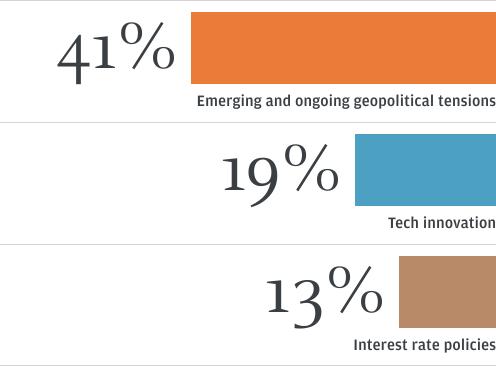
And we've just evolved ever since. If you take what's happened in the world, and in this case, we're talking about the survey from 2015 onwards, it's been 10 years of a number of very significant events, whether it's US elections, whether it's Brexit, whether it's the COVID crisis. It's been a lot of change and demand for trading with new entrants in the market in a world where the regulators were trying to create more transparency and more stability. It feels like all these different factors came together in the last 10 years, and things are still changing. And I think the survey that we've been running now for the last 10 years has really helped us at JP Morgan understand, A, what are the clients thinking about? What are they concerned about? And to be honest with you, it's also forced us to make sure that we had the technology in preparation for some of the events, which were accurately highlighted as concerns in the survey, but also what the new technologies were.
And it's not just feedback from JP Morgan direct clients. It's from the industry as a whole. We're getting direct inputs from our clients, but we're also getting inputs from other parts of the market that are evolving and developing. And one thing I think is pretty interesting is that almost every survey we've had, when we've asked the question about electronic trading and will it become more prevalent in the future, 100% of the clients are like, "Yep, we're going to be trading more electronically." And we keep seeing that.
Kate Finlayson:
And actually one of the predictions in recent years has been that the area that we could see the most increase in electronic trading would be emerging market rates. We can keep our eye on that one, but absolutely artificial intelligence, machine learning have persistently, certainly in the last several years, been highlighted as technologies that will shift significantly how market participants interact.
Scott Wacker:
And building momentum. And as an entity within the feedback, and obviously we see in the equity markets as well, we saw that interest early. At first, there was the question of whether you could use machine learning and developing trading tools, and now it's just prevalent in everything.
Even a lot of the offerings from various third-party entities or EMSes or even banks themselves are incorporating AI into the offering. I think that's going to be something that's going to be something to watch, certainly, going forward.